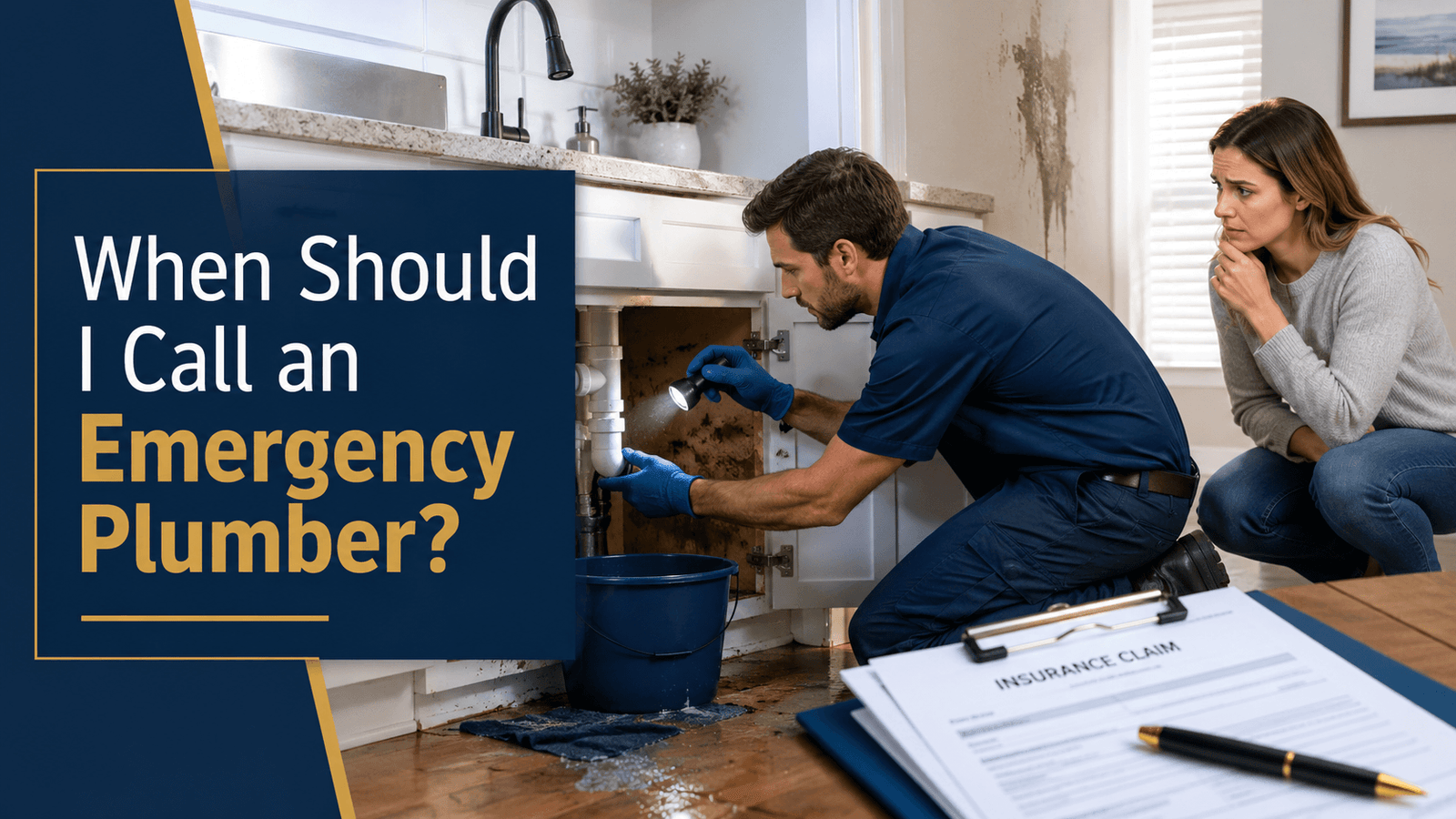


When Should I Call an Emergency Plumber?
A small drip can usually wait for a scheduled repair. Water pouring through a ceiling, a burst pipe, an overflowing toilet or a hidden plumbing leak damaging walls and flooring cannot. Here is how to know when you need an emergency plumber, how plumbers find the source of a leak, and when a Florida public adjuster may become important after the water is stopped.
When Should You Call an Emergency Plumber?
Call an emergency plumber immediately when water cannot be controlled, a pipe has burst, sewage is backing up, a toilet continues overflowing, a water heater is actively leaking, or water is entering walls, ceilings, cabinets or areas near electrical equipment. Stop the water when it is safe to do so, protect people and property, and get the source diagnosed as quickly as possible.
For a Florida homeowner, the first priority during a plumbing emergency is not the insurance claim. It is stopping additional damage. A qualified local plumber can identify the plumbing failure, isolate the water source and determine what needs to be repaired.
Once the immediate emergency is controlled, there is a second question: how much damage did the water cause? If flooring, drywall, ceilings, cabinets, baseboards, insulation or other parts of the property were damaged, an insurance claim may become part of the recovery process. That is where a licensed public adjuster can become valuable.
7 Plumbing Problems That May Require Emergency Service
1. A Burst or Broken Pipe
If a pressurized pipe breaks, water can spread extremely quickly. Shut off the main water supply if you can safely reach it and call a plumber immediately.
2. Water Coming Through a Wall or Ceiling
Water appearing away from a visible fixture may indicate a concealed pipe, drain or connection failure. Do not assume the stain shows where the leak started.
3. An Overflowing Toilet That Will Not Stop
Stop flushing and close the toilet shutoff valve. When wastewater continues rising or other drains are also backing up, professional plumbing help should not wait.
4. A Leaking Water Heater
Water collecting around a water heater can indicate a failed valve, connection or tank. A leaking tank can release enough water to damage nearby walls and flooring.
5. Multiple Drains Backing Up
When several toilets, tubs or sinks back up together, the problem may be deeper in the drainage system rather than a simple fixture clog.
6. Water Near Electrical Equipment
Water near outlets, panels, appliances or wiring introduces an electrical hazard. Stay out of the affected area and contact qualified professionals.
7. A Hidden Leak Causing Active Damage
A sudden wet ceiling, buckled floor, damp cabinet, rapidly growing stain or unexplained sound of running water may indicate a concealed plumbing leak.
How Does a Plumber Find a Hidden Water Leak?
One of the most important pieces of a water-damage situation is determining where the water actually came from. The location of visible damage and the location of the plumbing failure are not always the same.
Visual Plumbing Inspection
The plumber first looks at fixtures, supply lines, shutoff valves, toilets, water heaters, drains and exposed piping. Water staining, corrosion, moisture and the pattern of damage can provide clues.
Isolating Fixtures and Water Lines
A plumber may shut down or test different fixtures and sections of the plumbing system to determine whether the problem is connected to a toilet, sink, shower, appliance, water heater or pressurized supply line.
Pressure and Leak Testing
Depending on the plumbing system and suspected failure, testing can help determine whether a pressurized line is losing water even when the damaged pipe is not visible.
Accessing Concealed Plumbing
Sometimes the evidence points to plumbing behind drywall, inside a ceiling, underneath cabinets or in another concealed location. The plumber determines the practical access needed to confirm and repair the source.
Documenting What Failed
For significant water losses, keep the plumbing invoice, photographs and any written findings describing what was repaired. Documentation showing the source and timing of the problem may become important if an insurance claim follows.
South Florida property owners who need a plumber in Fort Lauderdale can use a local plumbing company to handle the immediate plumbing repair while preserving records related to the loss.
Emergency Plumber vs. Public Adjuster: Who Does What?
| Professional | Primary Job | Why It Matters After a Leak |
|---|---|---|
| Emergency Plumber | Locate the plumbing problem, stop or control the leak and repair the failed plumbing component. | Stops additional water from entering the property and helps establish the source of the loss. |
| Water Mitigation Company | Remove water and dry affected building materials when necessary. | Helps reduce additional moisture-related damage after the source is controlled. |
| Public Adjuster | Represent the policyholder in the property-insurance claim. | Reviews the loss and policy, documents property damage and communicates with the insurance company on behalf of the policyholder. |
When Does a Public Adjuster Come Into the Picture?
Imagine a supply line breaks behind a bathroom wall. The plumber arrives, isolates the line, opens the necessary access and repairs the broken plumbing. The plumbing problem may now be fixed—but the property damage may remain.
Water may have reached drywall, insulation, flooring, baseboards, cabinetry or the room below. That resulting damage is separate from the mechanical act of repairing the failed pipe.
This is where Florida Public Adjusting may become involved. A public adjuster represents the policyholder—not the insurance carrier—and can help evaluate and document the property-damage claim.
Florida Public Adjusting’s water damage claim service addresses losses involving plumbing leaks, broken supply lines, drain lines, water-heater failures, sewage backups and other water-related property damage.
Important: A Plumbing Leak Does Not Automatically Mean the Damage Is Covered
Insurance coverage depends on the specific policy, cause of loss, exclusions, deductibles, timing and other facts. A sudden plumbing discharge and outside floodwater are also not the same insurance event.
Florida’s Department of Financial Services explains that a policy may include a deductible for non-weather water losses such as accidental discharge or overflow from plumbing or household appliances, while flood coverage is generally separate from standard homeowners coverage.
What Should You Do After an Emergency Plumbing Leak?
Stop the Water Safely
Shut off the fixture valve or main water supply if you can safely do so. Never enter an unsafe electrical or contaminated-water area just to reach a valve.
Call the Emergency Plumber
The plumbing failure needs to be identified and controlled. For South Florida emergencies, 24/7 Best Plumbing’s emergency plumbers provide around-the-clock plumbing response.
Photograph the Damage
Take photos and video of the affected rooms, flooring, walls, ceiling, cabinetry and visible plumbing components before damaged materials are removed when it is safe to document them.
Keep Plumbing and Mitigation Records
Save invoices, reports, estimates, receipts and photographs. Do not throw away damaged plumbing parts or property prematurely when they may be relevant to documenting the cause or scope of the loss.
Notify the Insurance Carrier Promptly
Follow the notice requirements in your insurance policy. Florida DFS advises consumers to contact their insurer directly to report property damage and keep records related to emergency or temporary repairs.
Consider a Public Adjuster for a Significant Claim
If the water damage is substantial, the claim is complicated, the insurer’s estimate appears incomplete, or the claim becomes delayed, denied or underpaid, consider speaking with a licensed public adjuster.
Why the Plumber’s Leak Diagnosis Can Matter to the Claim
An insurance claim is not simply “my house got wet.” The cause of the water, where it originated, what failed, when it occurred and what areas were damaged can all become important.
For example, there is a major factual difference between water suddenly escaping from a broken plumbing supply line and outside floodwater entering a house. The physical result may look similar—a wet floor—but the insurance analysis may be very different.
That is why a plumber’s work and a public adjuster’s work can complement each other without being the same job. The plumber focuses on locating and repairing the plumbing problem. Florida Public Adjusting can then review the policy and document the resulting property damage as part of its insurance claims process.
Plumbing Emergencies That Can Lead to Water Damage Claims
Broken Toilet Supply Line
A failed supply line can release water across a bathroom and into adjacent flooring, walls or rooms below.
Burst Pipe Behind a Wall
Water can travel inside wall cavities before becoming visible, potentially affecting insulation, drywall, baseboards and flooring.
Water Heater Failure
A leaking or failed water-heater tank can affect garages, utility rooms, interior walls or neighboring spaces depending on its location.
Kitchen Plumbing Leak
Sink connections, refrigerator lines and dishwasher supply components can cause damage to cabinets and flooring when they fail.
Shower or Bathtub Leak
Failed valves, drains or concealed connections can allow water to enter walls or ceilings even when the shower itself appears normal.
Drain or Sewage Backup
A significant backup can create both property damage and sanitation concerns. Coverage for backups varies by policy and endorsements.
Fix the Leak First. Then Understand the Claim.
If water is actively entering your property, contact a plumber and protect the property first. Once the emergency is controlled, Florida Public Adjusting can review significant property damage and help you understand the insurance-claim process.
Request a Claim ReviewFind a Local PlumberEmergency Plumbing & Water Damage Claim FAQs
Should I call a plumber or my insurance company first?
If water is actively damaging the property, protecting people and stopping additional damage comes first. Shut off the water when safe and contact an emergency plumber. You should also notify your insurer promptly in accordance with your policy’s requirements.
Does homeowners insurance cover a burst pipe?
Some policies may cover resulting water damage from a sudden accidental plumbing failure, but coverage depends on the policy, cause of loss, exclusions, deductibles and circumstances. The failed plumbing component itself and resulting property damage may also be treated differently under the policy.
How does a plumber locate a hidden leak?
A plumber may use visual inspection, fixture isolation, pressure testing and other diagnostic methods to narrow down the source. Concealed leaks sometimes require access behind a wall, ceiling or cabinet to confirm and repair the failure.
When should I contact a public adjuster after a plumbing leak?
Consider contacting a public adjuster when there is significant resulting property damage, the claim is complicated, important damage may be hidden, or the insurance claim becomes delayed, denied or underpaid.
Can a public adjuster repair the plumbing leak?
No. A plumber repairs the plumbing problem. A licensed public adjuster represents the policyholder in the insurance claim and helps document and present covered property damage.
Is flood damage the same as water damage from a plumbing leak?
No. Outside flooding and an accidental plumbing discharge are different causes of loss and can be treated differently by insurance policies. Standard homeowners insurance typically does not provide the same coverage as a separate flood insurance policy.