
Quick answer
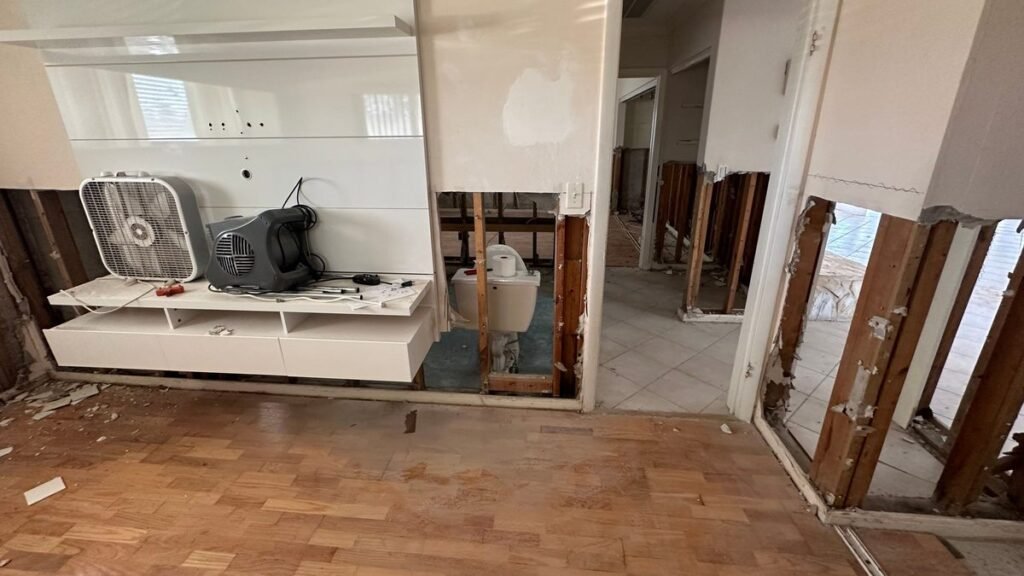
Your insurer may call all of the water “flood” and deny it. But water that came through a storm-damaged roof, window or wall, or backed up through a drain, can be a different claim with different coverage. Have a licensed Florida public adjuster inspect before you give a recorded statement or accept a denial.
The storms of November 17 to 19, 2026 dropped historic rain on Broward County. The National Weather Service recorded 72-hour totals of 17.59 inches near Plantation, 17.41 inches near Dania Beach, 12.29 inches near Hollywood, 12.06 inches near Parkland and 10.69 inches near Coral Springs. Broward County, Hollywood and Fort Lauderdale declared states of emergency, and the Governor added Broward to Florida’s fall flooding state of emergency on November 18.
Now the claims are coming in, and so are the denial letters. The most common one says the same thing: the damage was caused by flood, and flood is excluded. Sometimes that is right. Often it is only part of the story, and the part that gets left out is the part your policy may cover.
What is the flood exclusion trap?
A standard Florida homeowners policy excludes flood. In insurance terms, flood generally means surface water that rises and flows into the home from outside, such as water from flooded streets, canals or yards. That damage is covered by a separate flood policy, through the National Flood Insurance Program or a private flood insurer.
The trap is when an insurer applies that exclusion to all of the water in the house, without separating where each part of the damage came from. In a storm like the one Broward just had, water can get in several ways at once:
- Through storm-created openings. When wind or debris damages the roof, a window, a door or a wall, rain that comes through that opening is usually treated as part of the wind or storm loss, not flood. See our guide to wind-driven rain claims.
- Through the roof under the weight of water. The NWS received a report of a roof collapse in Hollywood blamed on heavy rainfall. Many homeowners policies include collapse coverage that names the weight of rain that collects on a roof.
- Up through drains and sewer lines. Sewage overflows were reported in Davie and Wilton Manors. Water and sewage backup is often excluded unless your policy has a water backup endorsement, so the policy language decides this one. Read more about sewer backup claims.
- From rising water outside. This is the flood part, and it belongs on the flood claim.
If the insurer never separates these, a covered roof or window loss can be written off together with the flood water.
Signs your water damage may not be only flood
- Stains or wet drywall on ceilings or high on the walls, above the flood line.
- Water that ran down the inside of walls, around window frames or under door headers.
- Missing, lifted or cracked shingles or tiles, or damaged soffits after the storm.
- Wet insulation or daylight in the attic.
- Water that came up through tubs, showers, toilets or floor drains.
- Damage on a second floor or in a condo unit that surface water could not reach.
Any one of these is a reason to have the damage looked at by someone who works for you before the claim is locked in. Our roof leak claims and window and door damage claims pages explain how these losses are documented.
When both policies apply, insurers underpay
Many Broward homes had both kinds of water. Rising water came in under the doors while rain came through the roof or a window. That means two claims, often with two insurers.
This is where money gets lost. The flood adjuster writes the damage below the water line. The homeowners adjuster says the rest was flood too, or writes only the roof. Damage that sits between the two scopes, such as drywall above the water line, cabinets, ceilings, insulation and contents, can end up on neither estimate. Each insurer points to the other.
The fix is to document the whole loss in one place, room by room, showing which damage came from which source, and then present each policy with the part it covers. Flood policies also have strict proof of loss rules and deadlines of their own. Learn more about flood damage claims.
Got a flood denial or a low offer after the November storms? Have it reviewed before you accept it.
No fee unless you get paid. The fee is agreed in writing before work starts. We work to get you a bigger settlement. Call (305) 964-8624 or request a free inspection.
The moisture you cannot see
After a few dry days, a home can look fine on the surface. The water is often still there:
- Behind and under cabinets. Kitchen and bathroom cabinet bases and toe kicks soak up water and hide it against the wall.
- Under tile and wood floors. Water travels under tile and through the subfloor. Wood and laminate cup, swell and separate weeks later.
- Inside walls. Drywall wicks water upward, and insulation behind it stays wet.
- Baseboards and door casings. These swell and separate first, and they are an early sign of trapped moisture.
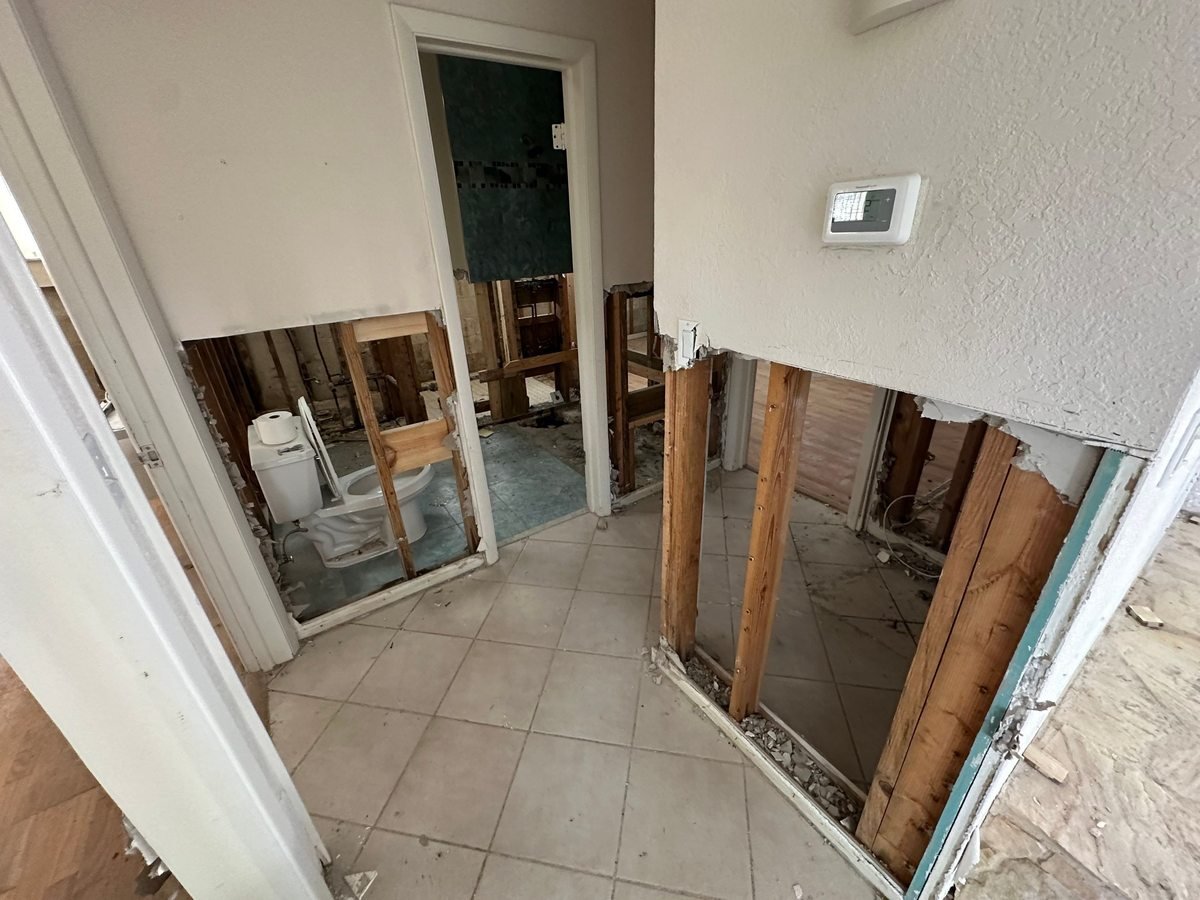
If it is not measured and written down, it is not in the estimate. Trapped moisture is also how mold starts. See our guides to water damage claims and mold damage claims.
Matching: Florida law on adjoining areas
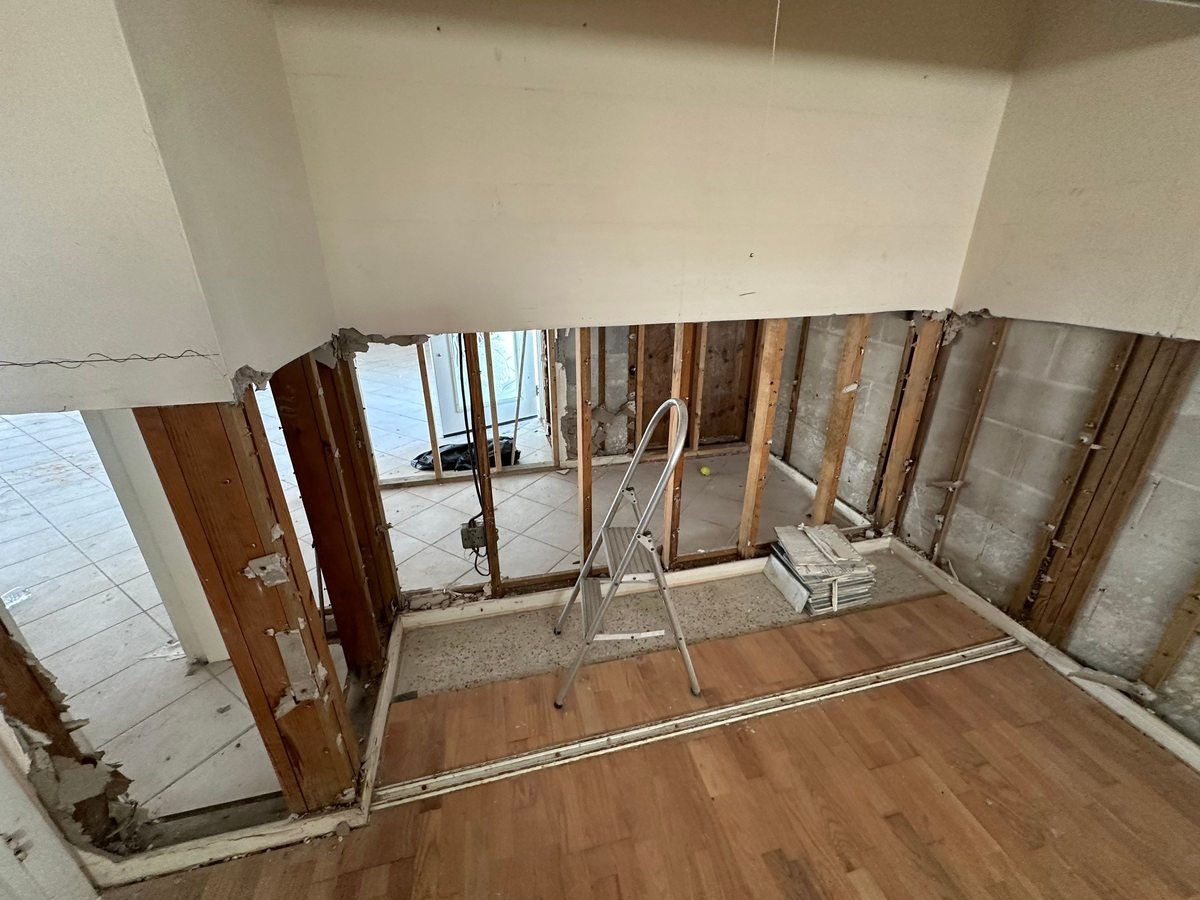
Insurers often offer to replace only the damaged rows of tile, a few cabinet doors or one section of flooring. Florida Statute 626.9744 says that when a covered loss requires replacing items and the replacements do not match in quality, color or size, the insurer shall make reasonable repairs or replacement of items in adjoining areas so the result is a reasonably uniform appearance. Continuous tile, wood floors and cabinet runs are where matching comes up most. Read more about architectural finishes damage claims.
What to do now
- Stay safe and stop more damage. Avoid standing water and wet electrical outlets. Start drying out, tarp any roof opening, and keep every receipt for fans, dehumidifiers, tarps and mitigation work.
- Photograph and video everything first. Record every room, the water line on the walls, ceilings, the roof, windows and the outside of the home before anything is moved or thrown away.
- Keep the damaged materials and do not sign off on a quick low estimate. Keep samples of flooring, drywall, cabinets and damaged contents until the claim is resolved.
- Have a licensed Florida public adjuster inspect and review your policy before a recorded statement or a locked-in scope. Under Florida Statute 627.70132, notice of a new property claim is due within 1 year of the date of loss and a supplemental claim within 18 months. For weather events, the date of loss is the date the storm was verified by the National Oceanic and Atmospheric Administration.
Already started your claim? You can still bring in a public adjuster. See hiring a public adjuster after your claim has started.
How Florida Public Adjusting helps
We work for you, not the insurance company. After a storm like this one, we inspect the home, trace where each part of the water came from, measure hidden moisture, read your homeowners and flood policies together, and build a complete, documented claim. If the insurer has already denied or underpaid, we review the decision and push back with evidence. See denied and underpaid claims.
Our office is in Hollywood, and we are working with storm-damaged homeowners across Broward County, including Hollywood, Fort Lauderdale, Coral Springs, Parkland and Weston.
There is no fee unless you get paid. The fee is agreed in writing before work starts, and we work to get you a bigger settlement. See how public adjuster fees work in Florida.
Results vary and depend on the policy and facts.
Get your storm water damage inspected
Tell us what happened and a licensed Florida public adjuster will call you back. Prefer to talk now? Call (305) 964-8624.
Broward flood damage claim questions
Does homeowners insurance cover flood damage in Broward County?
A standard homeowners policy excludes flood, meaning surface water that rises and flows in from outside. Flood is covered by a separate flood policy. Water that came in through a roof, window or wall opening the storm created is a different loss, and many homeowners policies treat it differently from flood.
My insurer denied my claim as flood. Is that the final answer?
Not always. A denial is the insurer’s position, not a ruling. If any of the water came from above, through a storm opening, or from a backup, the cause of each part of the damage matters. Have a licensed public adjuster inspect the home and review the denial letter and policy before you accept it.
What if I have both a homeowners policy and a flood policy?
Then both claims need to be documented together so damage is not dropped between them. Each insurer pays for the part of the loss its policy covers. When the scopes are written separately, damage often gets left out of both.
Should I give a recorded statement about the water damage?
Your policy may require you to cooperate with the insurer, but how the loss is first described can shape the whole claim. Have a licensed public adjuster review the damage and your policy before you give a recorded statement.
How long do I have to file a claim for the November 2026 Broward storm?
Under Florida Statute 627.70132, notice of a new or reopened property claim must be given within 1 year of the date of loss, and a supplemental claim within 18 months. Flood policies have their own proof of loss deadlines, so do not wait.
Reviewed by Joshua Solomon, Florida licensed public adjuster
Joshua Solomon is the founder of Florida Public Adjusting. Florida public adjuster license W106037. Firm license W805707. About Joshua
Florida Public Adjusting, 2206 Hollywood Blvd, Hollywood, FL 33020. (305) 964-8624
Last updated: November 24, 2026